
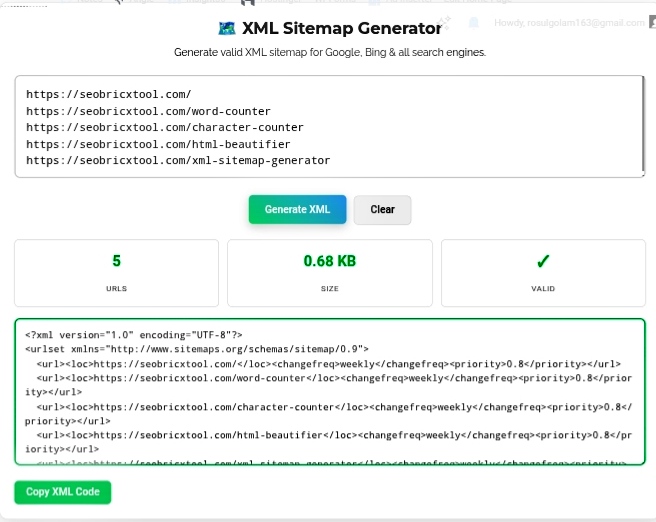
Let’s be real for a second. You could have the best content on the internet. Killer blog posts, amazing products, backlinks from legit sites. But if Google can’t find your pages? It’s all invisible. Literally pointless. That’s the harsh truth about organic visibility — discovery comes before everything else. And manually building an XML sitemap? Absolute nightmare. Tedious, error-prone, and completely unsustainable once your site grows past like 20 pages. That’s exactly why a dedicated XML Sitemap Generator isn’t just helpful — it’s basically essential for anyone who actually wants their site indexed properly.
What Is an XML Sitemap, Actually?
Okay, so an XML sitemap is basically a roadmap for search engine crawlers. Not the pretty HTML sitemap humans click through — this is strictly for machines. It’s a structured file that tells Google, Bing, Yandex, DuckDuckGo exactly where your pages live, when they were last updated, how often they change, and which ones matter most.
Think of it like leaving a detailed map for someone exploring your house. Without it, they’re just wandering room to room hoping to find everything. With it? They go straight to what matters, in the order you want. I’ve seen sites with hundreds of pages get fully indexed in days instead of weeks just because the sitemap gave crawlers perfect directions.
How Search Engines Actually Use This
Here’s the thing — Googlebot crawls billions of pages daily. Billions. It can’t afford to waste time guessing. While it does follow internal links, sitemaps are how you explicitly say “these pages exist, process them in this order, and don’t bother with these.”
Submit through Google Search Console or Bing Webmaster Tools and you’re basically handing over a prioritized to-do list. Fresh content gets discovered faster. Updates get re-crawled sooner. Old, unchanged pages don’t waste crawl budget. I’ve had clients see indexation speed double just from proper sitemap submission. No content changes, no new backlinks — just better instructions for the bots.
The Technical Stuff That Matters
Building a valid sitemap isn’t just throwing URLs in a file. There’s actual protocol:
XML declaration and namespaces — The file has to start correctly or parsers reject it immediately.
Root urlset tag — Wraps everything. One mistake here and the whole file is garbage.
Individual url entries with loc elements — Each page gets its own block with the exact URL.
Optional fields — changefreq , lastmod , priority . Advanced generators calculate these automatically. I’ve manually set priority=1.0 on everything once (rookie mistake) — completely defeated the purpose. The generator prevents that kind of dumb error.
One misplaced bracket, one unescaped character, one wrong date format? Crawlers silently ignore the entire file. No warning. No error message. Just… nothing. That’s why manual coding is so risky.
Why Automation Wins, Period
Look, I tried building sitemaps manually early in my career. Text editor, copy-pasting URLs, guessing at date formats. Broke something every single time. Syntax errors, duplicate URLs, malformed structures. And updating? Forget it. Every new blog post meant manually editing the file. Completely unsustainable.
An automated generator fixes all of this. Paste your URL list, hit generate, get production-ready XML instantly. It validates structure against official standards, checks file size, confirms compatibility. Feedback is immediate — you know if something’s wrong before uploading to your server. I’ve saved literally hours per week just by switching to automated generation.
Making Your Sitemap Actually Work
Generating the file is step one. Optimizing it is what separates pros from amateurs:
Only canonical, indexable pages — No redirects, no tracking URLs with parameters, no admin directories. I’ve seen sitemaps stuffed with /wp-admin/ and /cart/ pages. Crawlers waste budget on junk, important pages get ignored.
Size limits — Keep it under 50MB uncompressed and 50,000 URLs per file. Hit the limit? Split into multiple sitemaps and create a master index file. Google handles this perfectly.
Keep it fresh — Regenerate whenever you publish new content or restructure. Stale sitemaps are almost worse than none. They tell crawlers about pages that don’t exist anymore or miss pages that do.
Mistakes That Destroy Indexing
I’ve watched webmasters sabotage themselves repeatedly:
Broken links in sitemaps — 404s, 500s, redirect chains. Confuses crawlers, burns crawl budget, makes you look sloppy. Always validate before submitting.
Uniform priority values — Setting everything to 1.0 or 0.5 tells Google nothing. The whole point is guiding behavior. Use the scale properly or don’t use it at all.
Missing robots.txt reference — Your sitemap could be perfect, but if robots.txt doesn’t point to it, automated systems might never find it. Basic step that gets skipped constantly.
Always run generated files through official testing tools before deployment. Google has free validators. Use them. Every single time.
My Honest Take?
An XML sitemap is one of those boring, unsexy SEO fundamentals that quietly determines whether your site thrives or dies in search. No flashy keywords, no viral backlinks — just a clean, accurate file that tells search engines exactly what you have and where to find it. The generator removes every excuse for getting this wrong. No syntax anxiety, no manual updates, no silent failures. Just proper indexation, faster discovery, and stronger organic performance. In a world where everyone chases the latest SEO trend, nailing the basics is your actual competitive advantage.
Go generate your sitemap before Googlebot gets lost wandering your site. https://seobricxtool.com/4871-2/
