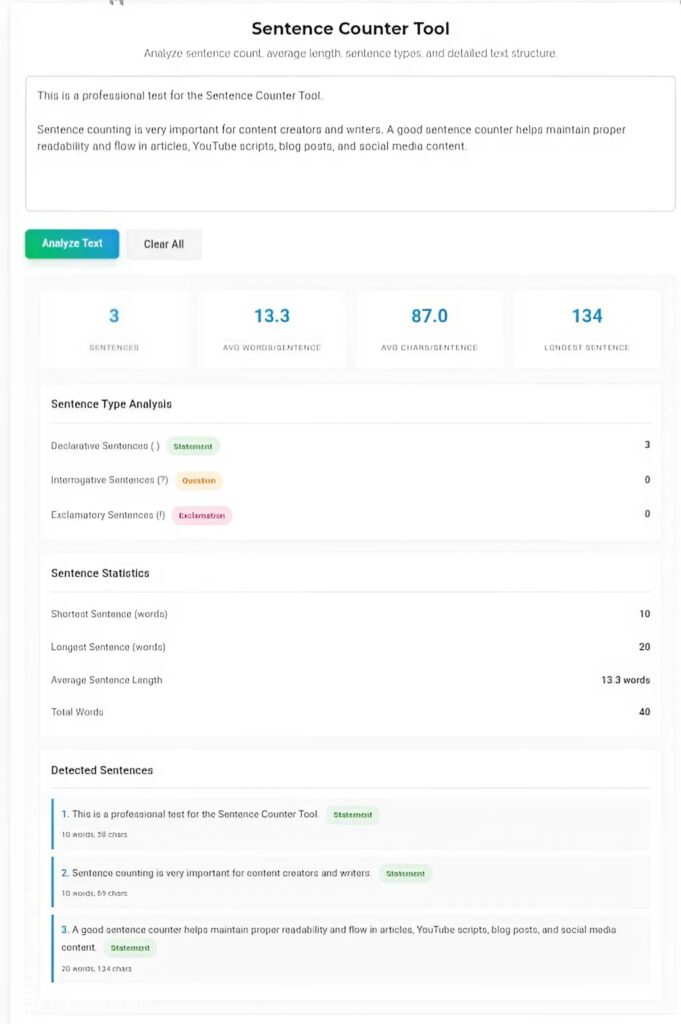
Great writing doesn’t yell for your attention—it just moves. Flow comes from rhythm, that natural back and forth between punchy lines, curious questions, and sentences that make a point. The Sentence Counter Tool helps you cut through all the guesswork. It shows you exactly what your sentences look like—how they’re built, what types you lean on, and where your balance tips. Whether you’re teaching, editing, or working on your fifth novel, this tool turns vague advice into concrete feedback.
Sentence types matter more than you realize. Not every sentence has the same job:
If you stick with just one type, your writing gets flat fast. Mix them up and everything picks up momentum. This analyzer shows you your mix so you don’t have to guess.
Here’s what you actually get from the tool:
These insights help you dodge the usual traps—sentences that ramble, weird jumps between ideas, or professional emails that come across as passive-aggressive.
Who benefits most? A lot of folks:
If you want to actually improve your rhythm, try this:
Uniform, machine-like writing feels cold. Readers feel it—even if they can’t explain why. Variety keeps people reading; it’s not just a style choice, it’s how our brains like to process words.
One last thought—clarity always wins over clever lines, and natural flow beats forced structure. Once you know how your sentences play together, you’re not just putting words on a page. You’re actually reaching your audience. Structure should work for your ideas, not the other way around.
Go ahead—analyze your sentences in seconds and get one step closer to publishing with intention. https://seobricxtool.com/4823-2/