
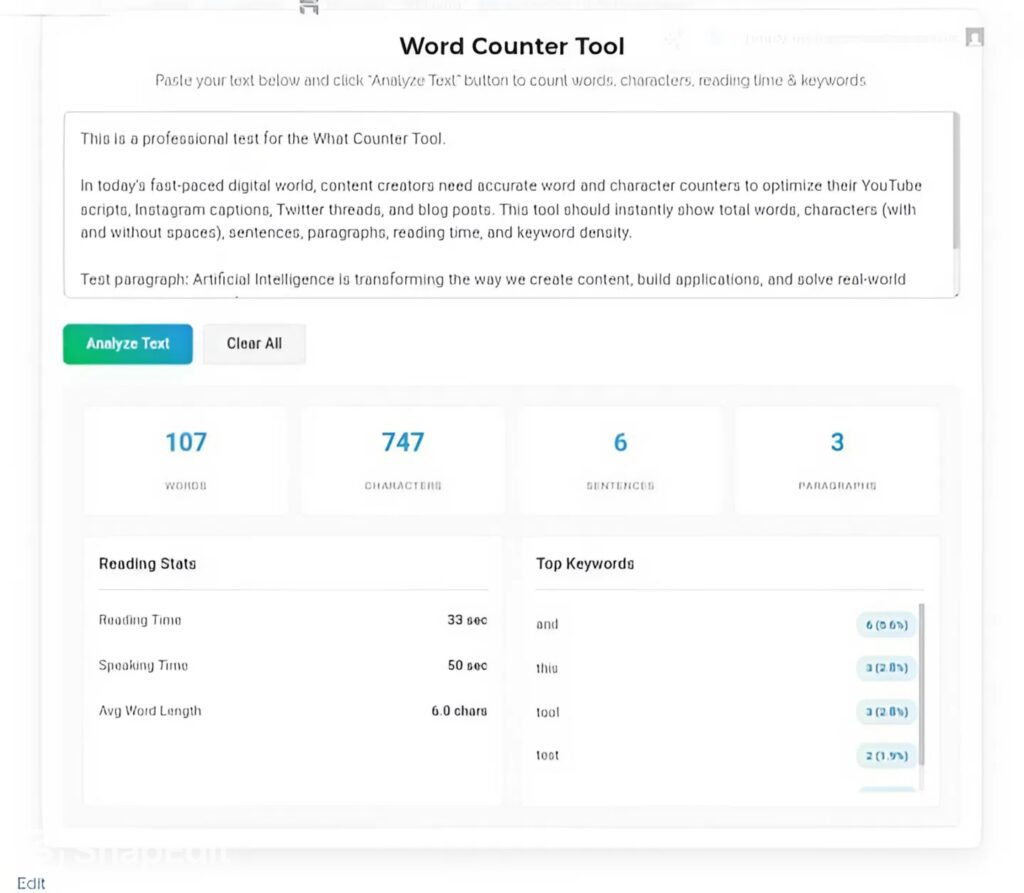
These days, everyone’s churning out content with AI tools and cookie-cutter templates, but real effort still shows. The Word Counter Tool does way more than count words — it actually tells you how your work comes across. Is it a slog to read? Does it hit the industry standards? Is the style right for your audience? It bridges that gap between just pumping out material and actually creating something valuable.Word count isn’t just another thing to tick off your checklist. Students chase minimums, journalists cram into limits, developers double-check APIs — but honestly, the number itself matters more than people realize. It hints at whether your writing is deep or clear, and whether you’re making a point or just filling space. Too short? You lose the details. Too long? People tune out. The sweet spot depends on what you want to accomplish. That’s exactly where a smart word counter can help.So what makes this tool different? Most just spit out a number. Here, you get:- Reading and speaking time — super useful if you’re prepping a podcast, speech, or video.- Keyword tracking — you can avoid overload while still putting your message front-and-center.- Average word length — tells you right away if your writing is straightforward or technical.- Sentence and paragraph stats — helps you see if your structure works.Put it all together, and you’re moving from simply “finished” to actually “effective.”Where does this matter? Pretty much everywhere:- Academia: Make sure your paper checks all the boxes, citations and all.- Marketing: Nail the right copy length for conversions (those product pages work best in that 500–800 word range).- Education: Teachers can pick readings that match grade level.- Legal and compliance: Check if disclaimers cover all requirements without rambling.Here’s how to use word count as your go-to filter:1. Set a word target based on what you really need to communicate.2. Check out top competitors. See how they structure and how long their stuff is.3. Cut ruthlessly. If chopping out 50 words makes it sharper, go for it.4. Always double-check reading time. Make sure people can actually get through your content.Watch out for these red flags:- Filler just to reach a minimum.- Saying the same thing five ways and pretending it’s “detail.”- Ditching citations so it looks cleaner.- Throwing around big words without considering your audience.When you get your word count right, you save people’s time and earn trust.Bottom line: Words matter. If you measure them smartly, your message lands right. Whether you’re wrapping up a thesis, launching a campaign, or teaching a class, concrete data beats guesswork every time.
Try the tool and see what detailed word analysis can do for you.https://seobricxtool.com/4812-2/
